Snorkelling from the Shore in Curaçao: Where to Walk In
Updated September 24, 2026 · 7 min read
On most Caribbean islands, snorkelling means booking a boat. On Curaçao it usually means parking the car and walking into the sea.
The reason is geology rather than luck. The island’s leeward coast drops away quickly into deep water, and the fringing reef grows along that drop — often only twenty or thirty metres from the sand. You swim out, the sandy bottom ends, and the reef wall begins. No boat, no guide, no booking.
That does not make the 56 snorkelling trips from €43.92 pointless. It means you should know exactly what you are paying for, which is usually transport or access to a place the road does not reach.
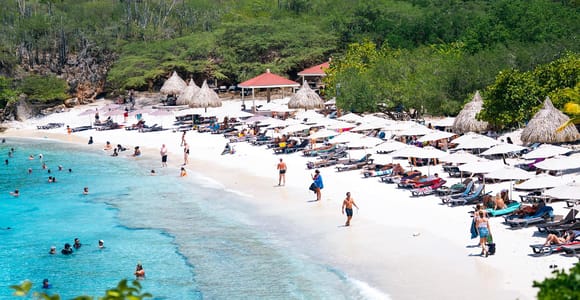
The bays where you can just walk in
All of these are on the sheltered west and south coasts. The north coast is open Atlantic, and nobody snorkels there.
Tugboat Beach, on the Caracasbaai peninsula south of Willemstad, is the one to do first. A small tugboat sank here in the 1980s and now lies in about 5 metres of water, roughly 50 metres out, with three square steel buoys standing between it and the shore. Five metres is the whole point: deep enough that the wreck looks like a wreck, shallow enough that a snorkeller at the surface sees it clearly. It is encrusted with coral and busy with fish, and the reef wall alongside it runs on towards Directors Bay next door.
Playa Lagun is a narrow cove on the west coast with cliffs on both sides. The cliffs block the wind, so the water stays calm when other places are choppy, and the interesting snorkelling is along the rock edges rather than straight out. Turtles are seen here regularly.
Porto Marie has a double reef: a shallow inner one close to shore and a deeper outer one beyond a sandy channel. The inner reef is enough for most people. Crossing the channel is for confident swimmers, and it is further than it looks from the beach.
Playa Kalki, at the far north-western tip, is known to divers as Alice in Wonderland for its mushroom-shaped coral heads. It is a long drive from town — plan the whole day around the west end rather than treating it as an afternoon stop.
Cas Abao is the gentle one: calm, protected, reef within easy reach, and facilities. It is privately run and charges per car rather than per person, which is unusual and worth knowing when you are four people in one vehicle — but the neighbours do not all do the same: Porto Marie charges per head. The amounts are a few dollars and they change, so check the sign at the gate rather than a website.
The turtle beach, and how not to be part of the problem
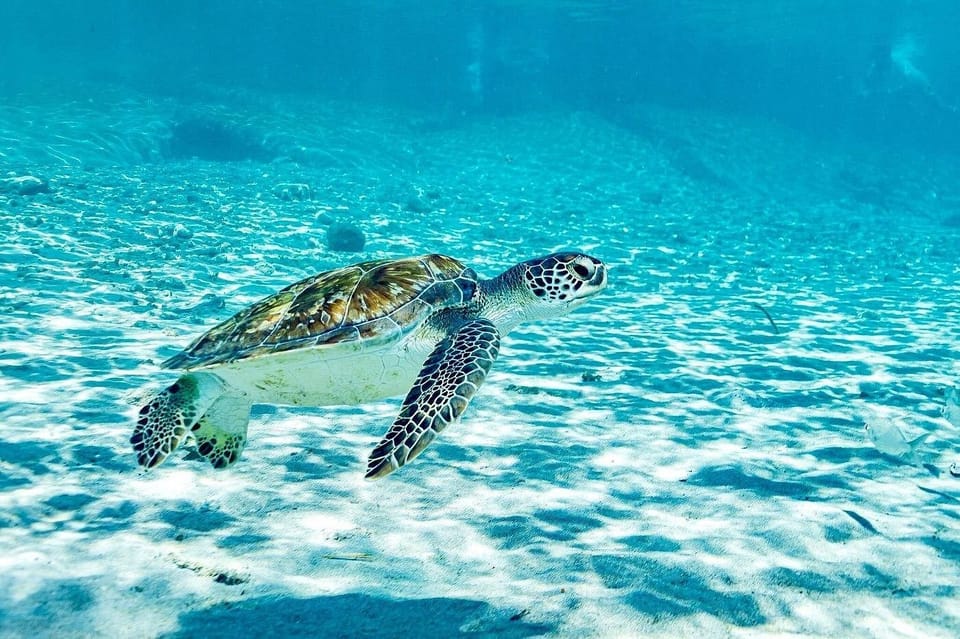
Playa Piskadó — signposted as Playa Grandi — is the exception to everything above. It is not a pretty beach. It is a working one: piskadó is Papiamentu for fisherman, and the fishermen clean their catch at the pier. Green turtles learned long ago that scraps land in the water there, and they turn up for them.
So yes, you will almost certainly see turtles, and yes, that is exactly why this place is under strain. Some turtles now avoid it. The rules are simple and they are not suggestions:
- Do not touch them. A turtle’s shell carries a protective layer that a hand damages, and the animal is stressed by contact it cannot escape. All sea turtles in Curaçao are protected by law.
- Do not feed them, and do not pay anyone who offers to lure them closer for a photograph. That is the specific practice conservationists here have been objecting to.
- Stay off the fishermen’s pier. It is their workplace.
- Keep your distance and give them a way out. A turtle surfacing to breathe needs a clear line up.
If you want the fuller picture on turtles, flamingos and the island’s captive-animal attractions, it is in animal encounters in Curaçao.
When a boat really is the answer
Two places you cannot walk to, and one you should not try to.
The Blue Room, a sea cave near Santa Cruz on the west coast, has its only entrance below the waterline. You duck under a low rock arch and come up inside a chamber lit entirely by light that has travelled through seawater, which strips out the warm colours and leaves everything glowing blue. It needs calm conditions and somebody who knows the entrance. A boat tour combining Turtle Bay and the Blue Room runs 4 hours 30 minutes at €86.96 — note that it holds 2.8 stars from 189 people, which is low enough that you should read the reviews before booking rather than after. A snorkel tour of the Blue Room with snacks is an alternative.
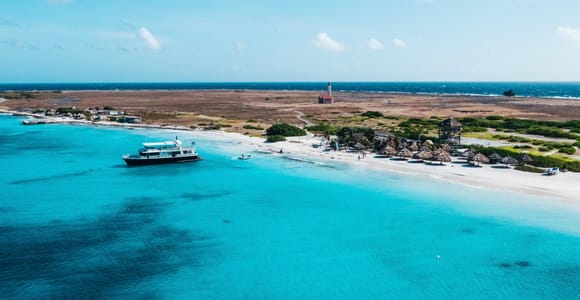
The offshore reef and the Tugboat by catamaran. A snorkel cruise with BBQ lunch and open bar takes 4 hours 30 minutes at €87.84 with 4.6 stars, and covers the wreck plus a shallow reef. You are paying for the lunch, the bar and not driving.
The west-end beaches without a car. A guided snorkel with turtles and Kenepa Grandi beach runs 4 hours at €65.88, 4.7 stars, and includes hotel or cruise-port pickup. A top-three-beaches tour with a turtle stop covers Playa Kalki, Playa Piskadó and Kenepa in 4 hours at €55.56.
Practical things nobody tells you
Bring your own mask. Rental gear on a busy morning is the worst-fitting equipment you will ever wear, and a leaking mask ruins the one thing you came for.
Wear something on your feet. Several entries are over rock, coral rubble or a stony ledge rather than sand.
Use biodegradable sunscreen, and put it on well before you get in. When the reef begins twenty metres from the beach, everything that washes off you lands on it.
Go in the morning. The wind builds through the day on almost every coast here, and the water is clearest and calmest early.
Do not snorkel alone at the wreck sites. At the Tugboat the three square steel buoys are waypoints on the way out, not a boundary — the wreck lies behind them, in open water — so watch and listen for boat traffic yourself before you swim across.
The 50 beach trips from €30 in our inventory exist mostly because those west-coast bays are spread across forty-odd kilometres of side roads. If you have a car, you do not need them. If you do not, they are the difference between seeing two beaches and seeing the coast.